
New Dog Walking Law in England and Wales: What Freelancers Who Care for Hounds Must Know

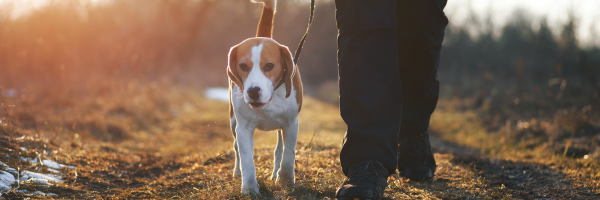
If you are a freelancer who offers hound care, dog walking, exercise, holiday cover or countryside pet services, there is an important legal change you need to know about.
From 18 March 2026, a tougher livestock worrying law is now in force across England and Wales. It is designed to better protect farm animals from dogs that attack, chase or distress them, and the consequences for getting it wrong are now far more serious than before.
For freelancers, this is not just something to casually note. It is something you need to understand properly because if you are walking or caring for hounds near farmland, rights of way, tracks, bridleways or livestock, this law could affect your work, your reputation and potentially your income.
What has changed?
The new law is the Dogs (Protection of Livestock) (Amendment) Act 2025, and it officially came into force on 18 March 2026 in England and Wales. It strengthens the old rules and gives police and courts much stronger powers.
The biggest change many freelancers need to pay attention to is the penalty. The maximum fine has increased from £1,000 to an unlimited fine. Police also now have stronger powers to investigate incidents, including powers to detain dogs, enter premises, and collect evidence such as DNA samples or impressions where appropriate. Courts can also order offenders to pay the costs associated with seizing and detaining a dog.
That means this is no longer something to shrug off as a minor countryside mishap. It is now a far more serious business risk.
What counts as livestock worrying?
A lot of people still think there only is a problem if a dog physically attacks an animal. That is not the case.
Official guidance makes clear that livestock worrying can include a dog attacking livestock, chasing livestock in a way that could cause injury or suffering, or being loose in a field or enclosure with sheep. The law and guidance also make clear that a dog does not need to make physical contact for harm to occur. Fear and stress alone can cause serious damage, injury, abortion in livestock, or loss of produce.
That is particularly important for freelancers handling energetic dogs, working breeds, hounds with strong scent drive, or dogs that can become excited in open countryside.
Which animals are protected?
The updated law covers more than many people realise. “Livestock” includes cattle, sheep, goats, swine, horses, camelids such as llamas and alpacas, ostriches, farmed deer, enclosed game birds and poultry. Official guidance also states that “horses” includes donkeys and mules.
That matters in the equine world because freelancers are often working in and around yards, paddocks, grazing land and mixed-use rural properties. If you also offer hound or dog services, you may easily be operating in spaces where protected animals are nearby, even if your main business is equine-focused.
It is not just fields anymore
Another major change is that the law now extends to incidents on roads and paths, not just inside fields. This reflects the fact that livestock are often moved along roads or public routes between fields, parlours and farm areas.
So if you think, “I am only on a footpath” or “I am just walking along a lane”, that is not a safe assumption anymore. If livestock are being moved nearby, or are close to the route you are using, you still need to be fully in control.
What does this mean for freelancers who care for hounds?
It means professionalism matters more than ever.
If you are being paid to care for or walk someone else’s hounds or dogs, clients will rightly expect you to understand the countryside rules and protect their animals from getting into trouble. One incident could damage your client relationship, trigger complaints, affect insurance, lead to police involvement, and harm your local reputation fast.
This is especially relevant if your business involves:
- dog walking in rural areas
- holiday cover for hounds or kennelled dogs
- exercising dogs for owners on farms or country estates
- combining equine freelance work with dog and hound care
- transporting dogs between rural properties
- walking multiple dogs at once near livestock
In other words, if dogs are part of your freelance offer, this law is part of your business knowledge now.
The practical rules you should follow
The Countryside Code says dogs should be kept on a lead around livestock, and official government advice says any dog is capable of livestock worrying, so dogs should always be kept under control and in sight. You should also always follow local signage.
There is one important safety exception. If you are chased or threatened by cattle, the official advice is to let go of the lead rather than risk being injured yourself.
For freelancers, the safest approach is simple:
Know your route before you set off.
Avoid livestock fields where possible.
Do not rely on “normally fine” recall near sheep, cattle or horses.
Keep dogs close, calm and visible.
Never allow dogs to run loose on farmland, tracks or near grazing animals.
Be extra cautious with strong, fast, excitable or prey-driven dogs.
If you are not confident in a dog’s control, do not take that dog near livestock.
Do not assume a hound is exempt because it is trained
This is where some freelancers can get caught out.
A hound may be beautifully mannered at home, in the kennel or on familiar routes. That does not mean it will stay calm when faced with sheep bolting, horses moving, alpacas staring, or cattle reacting. The law does not make exceptions because a dog is usually well trained, valuable, or part of a professional service. The question is whether the livestock were attacked, chased, distressed or put at risk.
That is exactly why freelancers need to be stricter than hobby walkers. This is part of running a responsible business.
What about dogs in someone else’s care?
The Act introduced a defence for owners where their dog worried livestock while in someone else’s charge without the owner’s consent, such as where the dog had been stolen or taken without permission.
But for freelancers, that is not a comfort blanket. If you are the one handling the dog professionally, you do not want to be anywhere near a situation where blame, control and responsibility are being argued after an incident. Prevention is the whole point.
How to protect your freelance business
If you offer services involving hounds or dogs, now is the time to tighten up your systems.
Make sure your client terms state where and how dogs will be walked.
Ask owners about recall, reactivity, livestock exposure and previous behaviour.
Avoid high-risk routes.
Review your insurance and check that dog handling or walking near livestock is covered.
Keep written records of client instructions and any incidents.
Do not take on more dogs than you can safely control in a rural setting.
This is also a good moment to update your website or profile wording so clients can see that you take responsible countryside dog care seriously. It builds trust and shows that you understand the realities of rural work.
Why this matters to the TallyHO Temps community
At TallyHO Temps, many freelancers work in real countryside settings, not neat urban environments. That means understanding the rules around horses, livestock, farm access and hounds is part of being credible, dependable and bookable.
The freelancers who do well are the ones clients feel safe handing responsibility to. Knowing this law, and acting on it, is part of that professionalism.
Final thought
This new rule change is not there to make life harder for good freelancers. It is there because livestock worrying causes real harm, real cost and real distress across rural communities. Government figures say the cost of livestock worrying has risen to nearly £2 million, and Defra cited survey data showing 87% of sheep farmers experienced a dog attack on their flock in 2024.
So if you care for hounds, walk dogs or offer countryside pet services alongside your equine work, do not ignore this.
Learn it. Apply it. Protect your clients, protect the animals in your care, and protect your business.
You're invited to
TallyHO.
Want to be a TallyHO Freelancer?
