

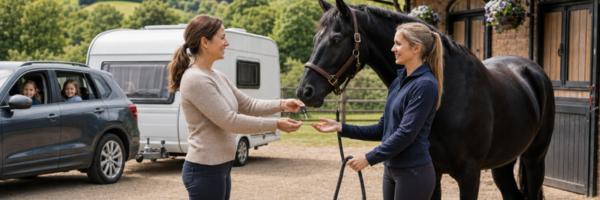
Hiring an equine freelancer correctly.
Whether you own one horse at a private yard or manage a busy competition, livery, stud or horse racing yard, hiring the right equine freelancer can give you reliable support without taking on another permanent member of staff.
However, hiring a freelancer should involve more than finding someone who is available. You are placing horses, equipment, property and more in that person’s care. You need to check that they have the right experience, insurance and understanding of the work before confirming the booking.
This guide explains how to hire an equine freelancer safely and professionally, from agreeing rates and hours to security, insurance, yard protocols and emergency procedures.
What is an equine freelancer?
An equine freelancer is a self-employed professional who provides services to horse owners, yards and equestrian businesses.
Depending on their experience, they may offer:
- General yard work
- Mucking out
- Feeding, watering and haying
- Turning out and bringing in
- Grooming
- Clipping
- Plaiting
- Exercising horses
- Schooling
- Competition grooming
- Holiday and sickness cover
- Night checks
- Foaling or stud support
- Rehabilitation support
- House, horse and hound sitting
- Riding instruction
- Equine administration
- Event support
A genuinely self-employed freelancer runs their own business and is responsible for its success or failure. They will normally work for several clients, submit invoices, manage their own tax and National Insurance and agree each job under a contract for services. GOV.UK explains the distinction between self-employment and employment.
Who sets an equine freelancer’s rate?
The freelancer sets their own rate.
This is one of the most commonly misunderstood parts of hiring an equine freelancer. Some clients assume they can advertise the work at a rate of their choosing, but a freelancer is not an employee applying for an hourly wage.
The freelancer decides what they charge based on factors including:
- Their experience and qualifications
- The difficulty and responsibility of the work
- The number and type of horses
- Whether riding is involved
- Whether they are working alone
- Travelling time and mileage
- Insurance and business costs
- Equipment and maintenance costs
- Early mornings, late nights or unsociable hours
- Short-notice availability
- The length of the booking
- Whether the work requires specialist knowledge
The client can set a budget, ask for a quotation and decide whether to accept the rate. Both parties can discuss the scope of the work, but the client should not treat a self-employed professional as an employee whose wage they control.
A freelancer may charge:
- An hourly rate
- A half-day or full-day rate
- A fixed price for a particular service
- A rate per horse
- A minimum call-out charge
- Mileage or travelling expenses
- A higher rate for urgent, weekend, overnight or bank holiday work
Always establish whether the price includes travel, equipment and any additional horses before booking.
Hiring for one or two private horses
A private horse owner will often need help with a clearly defined service, such as turning out, clipping, holiday cover or looking after horses for a weekend.
The arrangement may appear informal, but it should still be treated professionally.
Before searching for a freelancer, decide:
- What tasks need to be completed?
- How many horses are involved?
- What are the exact dates?
- What time must the freelancer arrive?
- How long should the work take?
- Will the freelancer be working alone?
- Is riding required?
- Are any horses young, nervous, strong or difficult?
- Does a horse require medication or specialist care?
- Will the freelancer need access to your home?
- Do you expect the freelancer to provide equipment?
- What would you like them to do if something goes wrong?
If you say that you need “a little help with the horses”, different freelancers may interpret that very differently. A detailed description helps them decide whether they have enough time, experience and appropriate insurance for the work.
Private horse owner hiring checklist
Before booking, check:
- The freelancer’s relevant experience
- Their confidence with horses similar to yours
- Their public liability insurance
- Whether their insurance includes care, custody and control
- Whether every booked activity is covered
- Their rate and minimum booking period
- Whether travel is charged separately
- Which tools and equipment they will bring
- Their cancellation terms
- What will happen if they become unavailable
- Their emergency procedure
- References or reviews where appropriate
- Their ability to work reliably without supervision
If riding is required, ask about the freelancer’s riding experience, size and weight suitability, current riding activity and experience with your horse’s type, age and level of training. Someone who is an excellent groom is not automatically the right person to exercise every horse.
Hiring cover for a busy yard
A busy yard usually needs more detailed planning because the freelancer will be working around employees, clients, machinery, vehicles and a larger number of horses.
Temporary cover might be required for:
- Staff sickness
- Annual leave
- Maternity cover
- Competition days
- Sales preparation
- Busy clipping periods
- Foaling season
- Hunt or event preparation
- Racing or pre-training work
- An unexpected increase in workload
- Emergency cover following an accident or resignation
The yard manager must establish exactly where the freelancer fits into the daily operation.
Busy yard hiring checklist
Before confirming the freelancer, establish:
- The number and type of horses they will handle
- The standard of riding or groundwork required
- Whether young, fit, rehabilitation, or competition horses are involved
- The expected start and finish times
- Break arrangements
- Who will allocate and explain the work
- Who the freelancer reports to
- Whether they will work alone at any point
- Which yard vehicles or machinery they may use
- Whether they need to drive a horsebox or transport horses
- Whether the booking could be extended if needed
- Which insurance, qualifications or licences are required
- What personal protective equipment they need
- How incidents and completed work should be recorded
- How the freelancer will be introduced to employees and clients
An urgent staffing problem should not mean abandoning essential checks. It is better to redistribute non-essential work temporarily than place an unsuitable or uninsured person in charge of valuable horses.
Check experience against the actual job
“Experienced with horses” is too broad to be useful on its own.
Someone may have spent 20 years caring for quiet leisure horses but have no experience riding fit racehorses, handling stallions or managing a large competition yard.
Ask specific questions.
Useful questions to ask
- What types of yards have you worked on?
- What types of horses do you regularly handle?
- How many horses are you accustomed to caring for during one shift?
- Have you worked alone before?
- Are you confident catching horses from a herd?
- Have you handled young horses, stallions or broodmares?
- Can you administer medication, and by which methods?
- Are you experienced with studs, racing yards or rehabilitation yards?
- What level of horse are you comfortable riding?
- Have you used this type of machinery or equipment?
- Can you provide a recent reference?
- What would you do if a horse became unwell, escaped or was injured?
For higher-risk work, consider a paid trial or an initial supervised shift. Qualifications can be helpful, but practical experience, sound judgement and honesty about limitations are equally important.
What insurance should an equine freelancer have?
The correct insurance depends on the services being provided. Public liability insurance is not universally compulsory for every self-employed equine freelancer, but clients should normally require appropriate cover before handing over responsibility for a horse or yard.
Public liability insurance
Public liability insurance may respond when the freelancer is legally liable for injury to another person or damage to third-party property.
For example, a horse might escape while being led and damage a vehicle, or a visitor might be injured because of something the freelancer did negligently.
Care, custody and control cover
Public liability insurance does not necessarily cover injury to the horse being cared for. Care, custody and control cover is designed for situations in which a horse is injured or dies while in the freelancer’s care and the freelancer is legally liable.
KBIS describes care, custody and control as cover for injury to, or the death of, a horse in the freelancer’s care where the freelancer is liable. Read the KBIS explanation of freelance groom insurance.
Personal accident insurance
Personal accident cover can provide financial protection for the freelancer if they are injured and cannot work. This is particularly important because a self-employed person will not normally receive employer-funded sick pay.
It should not be confused with public liability insurance. Public liability protects against certain claims from other people. Personal accident insurance protects the freelancer themselves, subject to the policy terms.
Specialist activity cover
The policy must cover the actual activity being performed. Depending on the job, this might include:
- Riding or exercising horses
- Teaching or coaching
- Clipping
- Competition grooming
- Handling stallions or youngstock
- Stud work
- Racing and gallops work
- House sitting
- Transporting horses
- Equine therapy or treatment
- Using freelance assistants or subcontractors
Racing, studs, gallops, hunting and other specialist activities may be excluded from a general policy or require additional cover. Never assume that a policy covering ordinary grooming automatically covers every equestrian activity.
How to check a freelancer’s insurance
Ask to see their current insurance schedule or certificate and check:
- The insured person or business name
- The start and expiry dates
- The level of public liability cover
- Whether care, custody and control is included
- The maximum value covered per horse
- The activities listed
- Any important exclusions
- Whether riding, clipping, teaching or transport is included
- Whether the type of yard is covered
Do not rely only on the statement “I’m insured”. Check that the policy matches the work you are booking.
Certified BGA Freelancers are HMRC registered, carry freelancers’ liability insurance and operate with written rates, invoices and client agreements. The British Grooms Association explains its certification standard here.
Who provides the tools?
This must be agreed before the booking.
A freelancer may provide their own specialist equipment, but they should not be expected to arrive with every tool required to operate a yard.
Examples of equipment a freelancer may provide
- Clippers
- Clipper blades
- Plaiting tools
- Grooming tools
- Teaching equipment
- Suitable riding clothing and footwear
Examples of equipment normally supplied by the client or yard
- Wheelbarrows
- Forks, brooms and shovels
- Feed and supplements
- Hay and bedding
- Headcollars and lead ropes
- Horse-specific tack
- Rugs and boots
- Yard machinery
- Horseboxes and trailers
- Medicines and veterinary supplies
- Yard first-aid equipment
For clipping, confirm whether the price includes clippers, blade changes, clipper oil and travel. The horse should be clean and dry, and the client should provide a safe, well-lit area with a suitable power supply.
The owner of any equipment should confirm that it is safe, maintained and suitable for the task. The freelancer should not use machinery, vehicles or unfamiliar equipment unless they are competent and authorised to do so.
Give the freelancer a proper written job brief
A clear job brief prevents misunderstandings and helps the freelancer price the work accurately.
Include:
- Client or yard name
- Full address and parking instructions
- Dates and arrival time
- Expected finish time
- Number of horses
- Horse names and locations
- Exact tasks
- Order of work
- Feed quantities
- Turnout arrangements
- Rugging instructions
- Medication requirements
- Riding or exercise instructions
- Equipment available
- Equipment the freelancer must bring
- Known hazards
- Difficult or unusual horse behaviour
- Emergency contacts
- Vet and farrier details
- Cancellation terms
- Security instructions
Avoid vague phrases such as “it's the normal yard jobs”. A freelancer visiting for the first time does not know what is normal on your yard.
Be honest about every horse
Tell the freelancer about any behaviour that could affect their safety.
This includes:
- Biting
- Kicking
- Rearing
- Bolting
- Pulling away
- Difficulties being caught
- Separation anxiety
- Fear of machinery
- Problems in traffic
- Loading difficulties
- Stable aggression
- Food-related behaviour
- A history of escaping
- Sensitivity when rugged, groomed or clipped
Do not minimise behaviour because you are worried the freelancer may decline the booking. Withholding relevant information prevents the freelancer from making a proper professional decision and may affect insurance.
Yard protocols and the first-day handover
Even a highly experienced freelancer needs to learn how your particular yard operates.
Show them:
- Where each horse lives
- Which fields and gateways are used
- Feed room organisation
- Feed charts and supplements
- Water points
- Hay and bedding storage
- Tack and equipment
- Rug storage
- Muck heap arrangements
- Isolation areas
- Fire exits and extinguishers
- First-aid kits
- Medicine storage
- Trip switches and water stopcocks
- Machinery controls
- Areas that are out of bounds
- Accident and incident reporting procedures
For a busy yard, introduce the freelancer to the person in charge and explain how information is communicated. If instructions change, make sure the freelancer is told directly rather than expecting them to pick up information from passing conversations.
Health, safety and lone working
Hiring someone on a freelance basis does not remove the client’s responsibility for safety. GOV.UK states that when a business hires a freelancer or contractor, it is still responsible for their health and safety. See the government guidance for hiring freelancers and contractors.
A commercial yard should include freelancers and contractors in its risk management arrangements.
Relevant risks may include:
- Horses with known behavioural problems
- Slippery surfaces
- Poor lighting
- Damaged fencing or gates
- Moving vehicles
- Tractors and machinery
- Working at height
- Manual handling
- Chemicals and medicines
- Fire
- Loose dogs
- Members of the public
- Lone working
- Extreme weather
- Working in fields without mobile reception
The Health and Safety Executive says that businesses must manage the risks facing lone workers, including self-employed people contracted to work for them. Suitable arrangements can include agreed contact times, reliable communication and a system for confirming that the person has finished safely. Read the HSE lone-working guidance.
A simple lone-working procedure
Agree:
- Who knows the freelancer is on site
- When they should check in
- What happens if they do not respond
- Which tasks must not be completed alone
- Where a phone or radio will work
- Who can reach the yard quickly
- How to summon emergency help
- How the freelancer confirms they have left safely
Emergency information
Leave clear written instructions for foreseeable emergencies.
The freelancer should know:
- The owner or manager’s emergency number
- A second contact if the first person cannot be reached
- The veterinary practice and preferred vet
- The horse’s registered name and insurance details
- Where passports are kept
- The maximum veterinary expenditure authorised
- Whether the freelancer may call the vet directly
- The farrier’s contact details
- What to do if a horse escapes
- What to do if fencing is damaged
- Where fire equipment is located
- The full address and postcode for emergency services
- Where the nearest suitable water supply is
- How an injured horse could be accessed or transported
Make it clear which decisions the freelancer can take without waiting for permission. In a genuine welfare emergency, delays caused by unanswered calls can make a serious situation worse.
Medication and veterinary care
Do not simply leave unlabelled medicines and assume the freelancer will know what to do.
Provide written details covering:
- The horse’s name
- The medication
- The prescribed dose
- How it is administered
- When it must be given
- How it should be stored
- Any protective equipment required
- What to do if a dose is missed
- What reaction or deterioration to watch for
- Who prescribed it
Confirm that the freelancer is competent and insured to carry out the task. Some procedures should only be undertaken by a vet or another appropriately qualified professional.
Biosecurity
A freelancer may visit several yards, so sensible biosecurity protects everyone.
Discuss:
- Clean footwear and clothing
- Disinfecting boots and equipment
- Whether shared tools can be used
- Isolation procedures
- Recent infectious disease concerns
- Horses with coughing, nasal discharge, diarrhoea or fever
- Restrictions on moving between different areas of the yard
- Whether the freelancer has recently worked at a yard with a suspected outbreak
Provide washing facilities and appropriate disinfectant where required. Ask the freelancer to report signs of illness immediately rather than continuing the routine without telling anyone.
Security when someone is working on your property
Security matters whether the freelancer is visiting for one hour or house sitting for a fortnight.
Agree:
- Where keys will be collected and returned
- Whether keys may be labelled
- Alarm instructions
- Gate codes
- CCTV locations
- Which buildings may be accessed
- Which areas are private
- Whether visitors are permitted
- Where vehicles should be parked
- What must be locked after each visit
- Whether photos or videos may be taken
- Whether anything may be posted on social media
- What to do with deliveries
- How lost keys or compromised codes must be reported
Only provide access to areas the freelancer needs. Change temporary codes after longer bookings where appropriate.
If the booking includes house sitting, put expectations about guests, pets, deliveries, heating, appliances and overnight absences in writing.
Protecting privacy and confidentiality
A freelancer may see valuable horses, client information, competition plans, veterinary records or the inside of a private home.
Make it clear that they must not:
- Share access codes
- Photograph private areas without permission
- Publish horse or client information
- Discuss veterinary details publicly
- Announce that a property is unoccupied
- Share a yard’s routines or staff arrangements
- Use client contact information for unrelated purposes
- Share pictures on social media
Commercial yards may wish to include a reasonable confidentiality clause in the booking agreement.
Transporting horses
If the freelancer will drive your vehicle or transport a horse, check:
- Their driving licence
- The vehicle categories on their licence
- Your motor insurance
- Whether they are covered to drive the vehicle
- Their horsebox or trailer experience
- Breakdown cover
- The vehicle’s roadworthiness
- Transporter authorisation and competence requirements
- The planned journey and emergency arrangements
In Great Britain, transporter authorisation and a certificate of competence can be required when animals are transported over 65 kilometres as part of an economic activity. Different requirements apply according to the journey and activity. Check the current animal transport rules on GOV.UK.
Never assume that being able to drive a car means someone is legally or practically qualified to transport horses.
Working with children or vulnerable people
If the freelancer will teach, supervise or regularly work with children, check the safeguarding and DBS requirements for the role.
Eligibility depends on the actual activities and how often they are performed. Coaches and instructors who regularly teach or supervise children may be eligible for an Enhanced DBS check, potentially including a Children’s Barred List check. See the current DBS guidance for sport.
Since January 2026, eligible self-employed people have been able to apply for Enhanced DBS checks through a registered umbrella body. See the Disclosure and Barring Service update.
A DBS certificate is one part of safer recruitment. References, safeguarding procedures, appropriate supervision and clear rules about communication and photography still matter.
Agree payment and cancellation terms
Before the booking starts, both sides should know:
- The agreed rate
- What the rate includes
- Whether travel is charged
- The minimum booking period
- How additional hours are authorised
- What happens if more horses are added
- The cancellation period
- Whether a cancellation fee applies
- What happens if bad weather prevents the work
- What happens if the freelancer becomes ill
- Whether a suitable substitute may be provided
Do not add jobs on arrival and assume they are included.
Avoid false self-employment
Calling someone a freelancer does not automatically make them self-employed. Employment status depends on how the relationship works in practice, not only on the wording used in an agreement.
There may be a status concern if a person:
- Works mainly or entirely for one yard
- Must personally work fixed hours indefinitely
- Cannot refuse work
- Is supervised and controlled like an employee
- Is integrated into the permanent staff rota
- Receives no genuine opportunity to make a profit or loss
- Is simply labelled self-employed to avoid employment rights
The government’s Check Employment Status for Tax tool can help clients and workers examine a particular arrangement.
Using a genuine freelancer for defined temporary cover is different from keeping someone on an employee-style arrangement while denying them employment rights.
Warning signs when hiring
Pause before booking if the freelancer:
- Cannot explain what services they provide
- Refuses to show evidence of insurance
- Has insurance that excludes the booked activity
- Claims to be experienced in every discipline
- Avoids questions about difficult horses
- Offers to transport horses without checking licences or insurance
- Wants to use unfamiliar machinery without instruction
- Plans to send another person without your agreement
- Has repeated complaints about reliability or horse welfare
- Pressures you to move a documented booking into an informal cash arrangement
Similarly, a responsible freelancer may decline a booking if the client withholds information, refuses to provide a safe working environment or expects uninsured work.
How TallyHO Temps makes hiring easier
Finding an equine freelancer should not require hours of searching Facebook groups, posting repeatedly or calling everyone you know.
TallyHO Temps brings equine freelancers together in one dedicated marketplace. Clients can search for professionals according to their location, experience and services, view their profiles and contact suitable freelancers directly.
The process allows clients to:
- Search for equine freelancers in the relevant area.
- Compare profiles, services and experience.
- Discuss the job directly with the freelancer.
- Confirm the tasks, hours, rate and requirements.
- Make a documented booking through the platform.
- Pay securely rather than relying on an informal arrangement.
- Leave a review after the work has been completed.
Freelancers control the services they offer and the rates they charge. Clients remain responsible for selecting someone suitable and checking that their insurance covers the work being booked.
TallyHO Temps supports the Certified BGA Freelancer initiative. Eligible freelancers can display their certification, helping clients identify professionals who have met the British Grooms Association’s standards relating to business structure, HMRC registration and liability insurance.
Find out how hiring works on TallyHO Temps.
Final equine freelancer booking checklist
Before confirming any booking, make sure you can answer yes to the following:
Suitability
- Does the freelancer understand the complete job?
- Do they have relevant experience with this type of horse and yard?
- Have they been told about all known behavioural issues?
- Are they competent to ride, clip, teach, drive or use equipment where required?
- Have references or reviews been checked where appropriate?
Insurance and documentation
- Is their insurance current?
- Does it cover the exact services being booked?
- Does it include suitable public liability cover?
- Is care, custody and control included where needed?
- Have any licences, qualifications or DBS requirements been checked?
- Are transport requirements covered?
Price and booking
- Has the freelancer confirmed their rate?
- Are travel, mileage and equipment charges clear?
- Are the dates and hours clear?
- Is the cancellation policy understood?
- Is there a record of the booking and payment?
Horses and routine
- Are feed, turnout, rugging and medication instructions written down?
- Are difficult behaviours disclosed?
- Are tack and equipment easy to identify?
- Does the freelancer know what must be recorded?
- Is there a clear handover procedure?
Safety and security
- Has the freelancer been shown the yard?
- Have known hazards been explained?
- Is a lone-working procedure in place?
- Are emergency contacts available?
- Are keys, alarms and access arrangements clear?
- Are confidentiality and social media rules understood?
Frequently asked questions
Should an equine freelancer have insurance?
Yes, clients should normally require insurance appropriate to the work. This will usually include public liability and may also need care, custody and control, riding, teaching, clipping, transport or specialist yard cover.
Does the client set the freelancer’s hourly rate?
No. A self-employed equine freelancer sets their own rate. The client can state a budget, request a quotation and choose whether to accept it.
Should a freelancer bring their own tools?
It depends on the service. A clipper may bring clippers and blades, while a general yard freelancer would normally expect the yard to provide wheelbarrows, forks, feed, tack and horse-specific equipment. Agree this before booking.
Is a written agreement necessary for a one-day booking?
It is strongly recommended. Even a short written booking record can confirm the tasks, hours, price, cancellation terms and responsibilities, reducing the risk of disagreement.
Is a freelancer responsible for their own tax?
A genuinely self-employed freelancer normally manages their own tax and National Insurance. However, both sides must ensure that the real working arrangement reflects self-employment.
Where can I find an equine freelancer?
TallyHO Temps allows horse owners, yards and equestrian businesses to search for equine freelancers, compare profiles, discuss their requirements and make a documented booking through one specialist platform.
The most important rule
Hire for the work you actually need, not simply for immediate availability.
The right equine freelancer should have suitable experience, valid insurance, clear rates, and a professional approach. In return, the client should provide an honest job description, a safe working environment, proper instructions and fair payment.
When both sides understand what has been agreed, freelance support can be one of the most flexible and valuable resources available to horse owners and equestrian businesses.
You're invited to
TallyHO.
Want to be a TallyHO Freelancer?
