

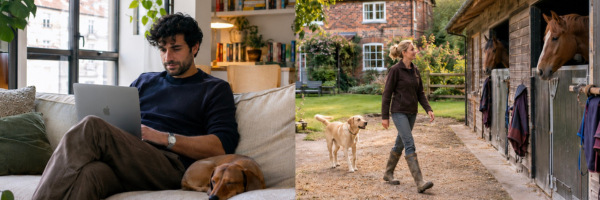
House Sitting is Different When it's Rural House Sitting
Looking after a countryside home is about far more than collecting the post, watering the plants, and enjoying a few days away from home. When horses, hounds and rural responsibilities are involved, house sitting becomes a very different proposition.
House Sitting or a Free Holiday? There's a Big Difference.
House sitting has become increasingly popular in recent years, particularly with the rise of digital nomads, remote workers and people looking to travel without paying for accommodation.
There are now numerous websites connecting homeowners with people willing to look after their properties in exchange for somewhere to stay. No money changes hands. The homeowner gets someone to keep an eye on the house, while the sitter enjoys free accommodation.
For a typical suburban home with a cat to feed, a few plants to water and some post to collect, this arrangement might work perfectly well.
But what happens when your home is in the countryside, your horses need feeding at 6.30 am, your hounds need exercising, the electric fencing needs checking and someone needs to be there when the farrier arrives?
Suddenly, the idea of someone sitting at your kitchen table working remotely for a software company, occasionally popping outside to check on the animals, doesn't sound quite so appealing.
And that's where TallyHO Temps is different.
Rural House Sitting Isn't a Holiday. It's a Responsibility.
Anyone who owns a rural property, particularly one with horses and hounds, knows that countryside living comes with anenormous amount of responsibility. There's no such thing as simply locking the front door and heading off on holiday without giving some serious thought to what happens while you're away.
Your animals don't take holidays. Neither do their routines.
A professional rural house sitter may be responsible for:
- Feeding, watering, turning out and bringing in horses.
- Mucking out stables, changing rugs and preparing feeds.
- Exercising horses where agreed and appropriately experienced.
- Walking, feeding and caring for hounds and other dogs.
- Managing kennels and following established animal-care routines.
- Checking paddocks, fencing, gates and water troughs.
- Recognising signs of illness, injury or unusual behaviour.
- Liaising with vets, farriers, yard staff and other visiting professionals.
- Monitoring the property, outbuildings, security and heating.
- Dealing with deliveries, tradespeople and unexpected problems.
- Keeping owners informed and ensuring everything continues to run smoothly
That's before we even consider what might happen when something goes wrong. If a horse becomes unwell, a hound escapes through a damaged fence, or a water pipe bursts during a freezing January night.
These aren't situations where you want someone frantically searching Google for advice because they've never dealt with anything similar before.
You need someone who understands rural life, recognises when something isn't right and knows when to call forprofessional help.
Why a Digital Nomad Isn't Necessarily the Right Person for the Job
Let's be clear; there's absolutely nothing wrong with being a digital nomad or working remotely, and for some house-sitting arrangements, remote workers are ideal. They can spend plenty of time at a property while continuing to earn their living online.
But rural house sitting often requires a very different commitment.
Let's say your house sitter works remotely from 9 am until 5 pm, has regular video meetings, and must be available to their employer throughout the working day. Meanwhile, your horses need turning out, the dogs need exercising, the vet is due at 11 am, and one of the horses has unexpectedly come in lame.
It's not really going to work, is it?
It's not that someone working remotely cannot care for animals. Some absolutely can, particularly if they have the necessary experience and flexibility. But there's a considerable difference between someone who can fit a little pet care around their working day and someone whose paid responsibility is to look after your property and animals.
With TallyHO Temps, the aim is to connect rural property owners with freelancers who have relevant skills and are beingengaged to carry out agreed work.
Their time, knowledge and experience are the service you're paying for.
The Complications of Offering Free Accommodation in Exchange for Work
There's another side to house sitting that rural property owners should consider carefully.
The growing popularity of accommodation-for-care arrangements has created two very different markets.
One involves professional house sitters who charge for their services.
The other involves people exchanging their time for somewhere to stay.
Neither arrangement is automatically wrong. However, when significant animal-care duties and rural property management are involved, the unpaid model can become complicated.
1. When Does a Favour Become Unpaid Work?
There's a big difference between asking someone to feed your cat twice a day and expecting them to manage a working yard, exercise several hounds, and maintain a rural property.
If you're asking someone to carry out several hours of essential work every day, is free accommodation really fair compensation?
Particularly when the accommodation is only available because the homeowner needs someone to remain on the premises.
The sitter may have little opportunity to explore the surrounding area or enjoy the property because they're tied to animal routines.
What initially sounds like a wonderful countryside break can quickly become a demanding unpaid job.
2. The Legal Position Isn't Always Straightforward
In the UK, an arrangement described as voluntary, unpaid or an exchange of accommodation doesn't automatically fall outside employment law.
Whether someone is legally a worker depends on the reality of the arrangement, including the obligations, level of control and benefits provided.
Accommodation can, in certain circumstances, form part of remuneration.
That means homeowners shouldn't assume that providing a bedroom instead of paying wages automatically removes any employment-law responsibilities.
Equally, a genuine informal exchange isn't automatically unlawful. The distinction depends on the facts.
The more an arrangement resembles a structured job with set hours, compulsory duties and substantial responsibilities, the more important it becomes to understand its legal position.
3. What About Insurance?
This is an area that can easily be overlooked.
Does your home insurance cover someone staying at your property while you're away?
What happens if the sitter accidentally damages something?
More importantly, what happens if a horse is injured while being handled or a hound causes an accident?
Professional indemnity and public liability insurance may be relevant, depending on the work undertaken, but neither should be assumed to cover every eventuality.
Animal-care activities, riding, property damage, and care, custody or control of animals can all have specific exclusions.
Whether you're engaging a paid freelancer or arranging an unpaid exchange, you need to check the relevant insurance cover beforehand.
4. Experience Isn't the Same as Enthusiasm
Loving animals is wonderful. But it doesn't automatically qualify someone to care for them. Someone who has owned a family dog may have no understanding of working hounds, kennels or managing several dogs together. Similarly, someone who enjoyed riding lessons as a child isn't necessarily experienced enough to manage horses independently.
Horses require knowledge of behaviour, handling, feeding and recognising potential health problems.
Rural properties may also have machinery, electric fencing, other animals, private water supplies and other features unfamiliar to someone who normally lives in a town or city.
Enthusiasm is no substitute for practical experience.
5. What Happens When the Sitter Decides to Leave?
Imagine you're halfway through a long-awaited holiday abroad and your unpaid house sitter contacts you to say the responsibilities are more demanding than expected and they've decided to leave early.
What happens next?
Who feeds the horses? Who looks after the hounds? Who checks the property?
An unpaid arrangement can still include clear commitments, but resolving disagreements or arranging emergency replacement cover may prove difficult.
A professional booking should set out the agreed responsibilities, dates, fees, cancellation arrangements and what happens if the sitter cannot continue. That doesn't eliminate every risk, but it provides a much clearer starting point.
6. Overseas Sitters and Immigration Rules
Some house-sitting exchange platforms attract international travellers.
However, overseas visitors should not assume they can undertake house sitting in the UK simply because no money changes hands.
Immigration rules can treat accommodation or other benefits received in exchange for services as relevant to whether someone is undertaking work. The position depends on the individual's immigration status and the nature of the arrangement.
Homeowners considering an international sitter should check the applicable rules rather than assuming a tourist visit permits the arrangement.
7. Can Free Accommodation Really Replace Payment?
There's another important point here.
Under UK minimum wage legislation, accommodation provided by an employer can count towards minimum wage calculations, but only up to a government-set accommodation offset.
That means the value of a beautiful country house doesn't automatically replace the need to pay someone properly if the arrangement legally amounts to employment or worker status.
Even if the property would normally rent for thousands of pounds a month, that doesn't necessarily mean someone can be expected to carry out substantial daily work without wages.
The legal position depends on the circumstances, but rural homeowners should be particularly careful about expecting extensive animal care or property maintenance in exchange for accommodation alone.
What Makes a TallyHO Temps House Sitter Different?
TallyHO Temps approaches rural house sitting from a different perspective.
We recognise that a countryside home isn't always just a house. It may be part of a working equestrian property, a smallholding or a family home where animals are central to everyday life.
Our platform connects property owners with independent freelancers offering relevant services, whether that's horse care, hound care, rural house sitting or a combination of all three.
The important difference is that you're looking for someone with the right experience to do a job, rather thansomeone simply looking for somewhere free to stay.
A TallyHO freelancer may already work as a groom, yard assistant, dog handler or experienced animal carer.
They understand that horses need consistency, hounds need exercise, and rural properties have their own routines and challenges.
They also understand that looking after someone's animals is a serious responsibility.
Of course, every freelancer has different skills and experience. That's why homeowners should discuss their requirements carefully, check references and relevant insurance, and make sure the person they book is suitable for the work involved.
Paying for Experience, Not Simply a Presence
It's tempting to think that free house sitting could save a considerable amount of money, and for straightforward arrangements, it might.
But if you own horses, hounds or a rural property requiring daily attention, it's worth asking yourself what you're actually paying for when you engage a professional.
You're paying for someone's time, practical experience, reliability and willingness to take responsibility.
You're paying for someone who knows the difference between a horse having an off day and a horse showing signs that require urgent veterinary attention. You're paying for someone who understands that leaving a gate open can have serious consequences.
And you're paying for someone who knows that caring for animals doesn't always fit neatly into a nine-to-five working day.
A beautiful countryside home might be a holiday destination to someone else. To you, it's your home, your animals and everything you've worked hard for.
Surely that deserves more than an arrangement based purely on the offer of free accommodation?
Horses, Hounds and Homes. It's a Way of Life.
At TallyHO Temps, we understand that rural living is different.
A house sitter looking after a townhouse with two cats may have very little in common with someone at a countryside property with four horses, three hounds, outbuildings and several acres of land and a yard cat.
Both roles have responsibilities, but the skills, experience and commitment required can be worlds apart.
That's why we believe rural house sitting should be recognised as a valuable professional service.
It's not an opportunity to live rent-free while working elsewhere. And certainly not an excuse to expect hours of unpaid labour.
It's about finding the right person, agreeing on the work involved and paying fairly for the time and expertise required.
Looking for Someone to Care for Your Rural Property?
Whether you're planning a holiday, need temporary cover or simply want peace of mind while you're away, TallyHO Temps can help you find independent freelancers offering rural house sitting, horse care and hound care.
Browse freelancer profiles, discuss your requirements and arrange paid bookings through the TallyHO Temps platform.
Because when it comes to your horses, your hounds and your home, you don't just need someone to stay. You need someone who knows what they're doing.
Find your rural house sitter at www.tallyhotemps.com
You're invited to
TallyHO.
Want to be a TallyHO Freelancer?
