

Do You Give All Your Clients a Cancellation Policy?
Why every freelancer needs a cancellation policy, how to protect your income, and what to do when a client cancels at the last minute.
You love working with horses and hounds and all the other animals along the way. You've built your freelance business around doing something you genuinely enjoy. But there's one thing that can quickly take the enjoyment out of being self-employed, and that's last-minute cancellations.
When you've arranged your working day, turned down another booking because you're already committed, planned your travel and calculated what you'll earn that week.
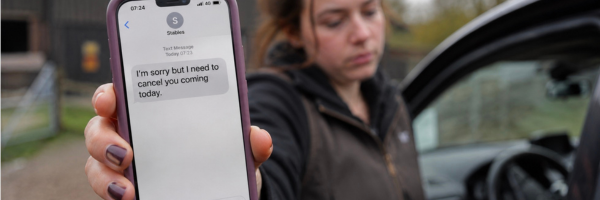
Then the message arrives.
"Sorry, we don't need you tomorrow after all."
Or perhaps:
"Our regular groom can cover it now, so we won't need you today."
And just like that, the money you were relying on has disappeared.
But your bills haven't disappeared.
Your vehicle still needs fuel, your insurance still needs paying, and the cost of running your business certainly hasn't gone down.
Cancellations aren't just inconvenient; they can genuinely damage a small freelance business.
When Being an Animal Lover Makes Cancellations More Complicated
One of the things that makes working with horses and hounds so rewarding is that we genuinely care about the animals we look after. And because we're dealing with animals, we also know that things don't always go to plan.
Animals become ill, emergencies happen, and sometimes circumstances change through absolutely no fault of the owner. That's simply part of life when you're responsible for horses and hounds.
Of course, there are always going to be exceptions when it comes to cancellations, and most freelancers would be the first to show understanding when a client is dealing with a genuine emergency.
After all, you're an animal lover first and foremost. The last thing you want is to add to someone's worries when they're already dealing with a difficult situation.
But there's also another side to consider.
Being understanding and compassionate shouldn't mean that your business is always expected to take the financial hit.
You still have bills to pay, commitments to meet and a business to keep running. Every booking you accept represents time you've set aside, often at the expense of accepting other work.
This is why it's so important to have a cancellation policy that protects your income while still allowing you to use your discretion when exceptional circumstances arise.
There's a considerable difference between a client cancelling because of a genuine emergency and someone cancelling at the last minute simply because they've changed their plans, found someone cheaper or decided their regular member of staff can cover the work after all.
The first deserves understanding and flexibility. The second is precisely why cancellation policies exist.
And let's not forget that good working relationships go both ways. Just as clients expect freelancers to be reliable, professional and considerate, freelancers should be able to expect the same in return.
Most good clients will understand that you're running a business, not simply filling spare hours in your diary.
A cancellation policy isn't about penalising people when things go wrong. It's about making sure your time and commitment are respected.
Ultimately, it's about striking a sensible balance between compassion and protecting your livelihood. You can be flexible, you can be understanding, and you can occasionally waive a cancellation fee when you feel it's the right thing to do.
But that should be your decision, rather than something every client automatically expects.
Because loving what you do doesn't mean you can afford to do it for nothing.
Your Time Has a Value, Even When You Don't End Up Working
There's a big difference between someone cancelling a booking two weeks in advance and someone cancelling at 7 pm when you're due at their yard at 7 am the following morning.
With two weeks' notice, you've got a reasonable opportunity to find replacement work, but with twelve hours' notice, your chances are considerably smaller.
And what if you've already turned down another client? That's the part many people forget.
When a freelancer accepts a booking, they're committing their time to that client. They're making themselves unavailable to everyone else during those hours. A last-minute cancellation doesn't simply mean you've gained a few hours off; it means you've potentially lost income that you cannot replace.
Why Every Freelancer Needs a Clear Cancellation Policy
If you're running a freelance horse or hound business without a cancellation policy, you're leaving yourself financially vulnerable.
And if you've got one but never actually share it with clients, it's not doing much to protect you either. Your cancellation policy should be part of your booking arrangements from the very beginning.
For example, you might state:
Cancellations require a minimum of 48 hours' notice. Bookings cancelled with less than 48 hours' notice will be charged at the full agreed booking rate. Exceptional circumstances may be considered at the freelancer's discretion.
It's simple, clear and professional.
The client knows exactly where they stand before making a commitment.
So when their regular member of staff suddenly becomes available, and they decide they don't need you after all, they already know that cancelling at the last minute may still cost them.
That's an important distinction.
They're not being unexpectedly presented with a bill because they're being held to the cancellation terms they agreed towhen they booked you.
Make sure clients receive and accept your terms before the booking is confirmed. Cancellation charges must also be fair and reasonable under applicable consumer law; putting a charge in your terms does not automatically make it enforceable.
Should You Make Exceptions for Genuine Emergencies?
Absolutely. But you need to decide what qualifies as an exceptional circumstance.There's a world of difference between a client cancelling because they've changed their mind and cancelling because of a genuine emergency.
You might consider waiving or reducing a cancellation charge in situations such as:
- A serious veterinary emergency involving the animal you were booked to care for.
- An unexpected hospital admission or serious medical emergency affecting the client.
- An animal welfare emergency or other exceptional circumstances outside the client's reasonable control.
However, these should be considered individually, rather than automatically resulting in a free cancellation.
For example, if a horse is lame and cannot be ridden, could the client still use your booked time for grooming, mucking out or other suitable yard duties? If a dog is unwell and cannot go on its usual walk, could the visit be adapted to provide appropriate care instead?
Sometimes a booking doesn't need to be cancelled at all. It simply needs to be adjusted. Flexibility is a wonderful quality in a freelancer, but it shouldn't mean you're always the person taking the financial hit.
What Happens When a Client Refuses to Pay?
Unfortunately, there will always be the occasional client who believes that because you haven't physically carried out the work, you shouldn't be paid. You can explain that you reserved the time, turned away other opportunities, and provided your cancellation terms in advance.
They may still refuse.
This is where you need to make a business decision.
Is it worth pursuing the outstanding fee? Is the client usually reliable? Is this a one-off situation or something that'shappened repeatedly?
Sometimes, even when you have a reasonable contractual entitlement to a cancellation fee, collecting it can prove difficult.
You may decide that the time and effort involved in pursuing a relatively small amount simply isn't worthwhile.
That doesn't mean the client was right; it means you've made a commercial decision about what's best for your business.
But don't ever forget what happened.
Keep records of cancellations, particularly repeated last-minute ones, and think carefully before accepting further bookings from someone who consistently fails to respect your time.
The horse and hound world can be a small one. People talk, and clients who repeatedly treat freelancers badly may eventually find that fewer people are willing to work for them.
A good reputation matters on both sides of the booking.
Build a Little Cancellation Protection Into Your Prices
Here's something freelancers don't always consider.
Even with a cancellation policy, there may be occasions when you lose income.So why not allow for that when you're setting your prices?
Let's say you normally charge £20 for a particular visit, and you regularly experience the occasional unpaid cancellation.
Increasing your fee slightly, perhaps to £21 or £22, could help build a small financial buffer over time.
You're not charging clients a cancellation fee in advance. You're simply making sure your business rates reflect the genuine costs and risks of being self-employed.Think of it in the same way you account for fuel, insurance, vehicle maintenance, and equipment because lost bookings can be a business cost too.
Naturally, your rates still need to be appropriate for the service you're providing. But pricing your services so tightly that one cancelled afternoon causes financial problems isn't a sustainable way to run a business.
How TallyHO Temps Can Help Protect Freelancers
One of the benefits of being booked through TallyHO Temps is that the client pays for the booking upfront.
Rather than having to chase the client for payment after the work has been completed, the booking funds are collected in advance and held through the platform's payment arrangements pending settlement.
This can make a real difference when cancellations happen.
But there's something every freelancer must do: make sure your cancellation policy has been clearly communicated to the client before the booking is confirmed.
If a cancellation dispute arises, TallyHO Temps can investigate the circumstances, review the agreed cancellation terms and booking records, and help determine the appropriate settlement in accordance with the platform's terms and applicable law.
That means you aren't necessarily left to deal with a difficult cancellation entirely on your own. It doesn't mean that every cancellation will automatically result in full payment. The terms need to be fair, agreed in advance, and applicable to the circumstances. But having the payment collected upfront, together with clear booking records, gives everyone a much better starting point.
A Cancellation Doesn't Have to Mean an Empty Diary
Here's another important piece of advice.
The moment you know a booking has been cancelled, start trying to fill the space. Don't wait until the next morning and don't assume nobody will need you at such short notice. Horse owners, yards, kennels and hound owners can all find themselves needing help unexpectedly.
Someone's groom might have called in sick. A dog owner may suddenly need to travel. A livery yard might need additional hands for the afternoon. That means your newly available time could be exactly what someone else needs.
1) Put a post on Facebook or Instagram straight away.
Something as simple as:
Last-Minute Availability! 🐴🐾
I've had a cancellation and now have availability tomorrow morning for horse or hound care in the local area.
Available for mucking out, turnout, grooming, exercising horses, dog walking or general animal care.
Please message me if you need an extra pair of hands!
2) You could also send a WhatsApp message to your regular clients and contacts who have agreed to receive availability updates.
Make sure you include your location, available hours and the services you're happy to provide.
The more quickly you get the message out, the better your chances of replacing that lost booking.
3) And don't forget to update your availability on TallyHO Temps so potential clients can see you're free.
Don't Let One Cancellation Ruin Your Working Week
Cancellations are part of running almost any service business.
Hairdressers experience them. Personal trainers experience them. Tradespeople experience them. So, horse and houndfreelancers are certainly no exception. You won't prevent every cancellation, and sometimes you'll decide that goodwill is more valuable than insisting on a fee.
What you can do is prepare for them.
Always have clear terms and make sure clients agree to them. Keep a record of bookings and cancellations. Build some financial protection into your pricing, and always be ready to advertise unexpected availability.
Most importantly, treat your freelance work as any other business.
You might have started working with horses and hounds because you love animals, but you still deserve to earn a reliable income and have your time respected. The clients who genuinely value what you do will understand that.
Free Download: Freelancer Cancellation Policy Template
To help you protect your business, we've created a simple cancellation policy template that you can personalise and send to clients before accepting bookings.
Your Free Cancellation Policy Template
Simply add your business details, personalise the terms and share the policy with clients before confirming their bookings.
Please note: This is a general template, not legal advice. UK consumer law requires cancellation charges to be fair and proportionate, rather than automatically imposing a penalty.
A final word from TallyHO Temps: Being professional doesn't mean being inflexible. It means setting clear expectations so that both you and your clients know exactly where you stand.
Join TallyHO Temps Today
You're invited to
TallyHO.
Want to be a TallyHO Freelancer?
